The answer
A 7-11-4 content roadmap plans 7 hours of high-value content, 11 trust-building interactions and 4 platforms for each buyer. To build a content roadmap with the 7-11-4 framework, stack a deep content library, design connected interactions, show up on at least four platforms, and map each asset to a stage in the buyer journey.
What is a 7-11-4 content roadmap?
A 7-11-4 content roadmap is a content plan built on the 7-11-4 framework. Read How to use the 7-11-4 framework to build trust and grow your business first if the framework is new to you.
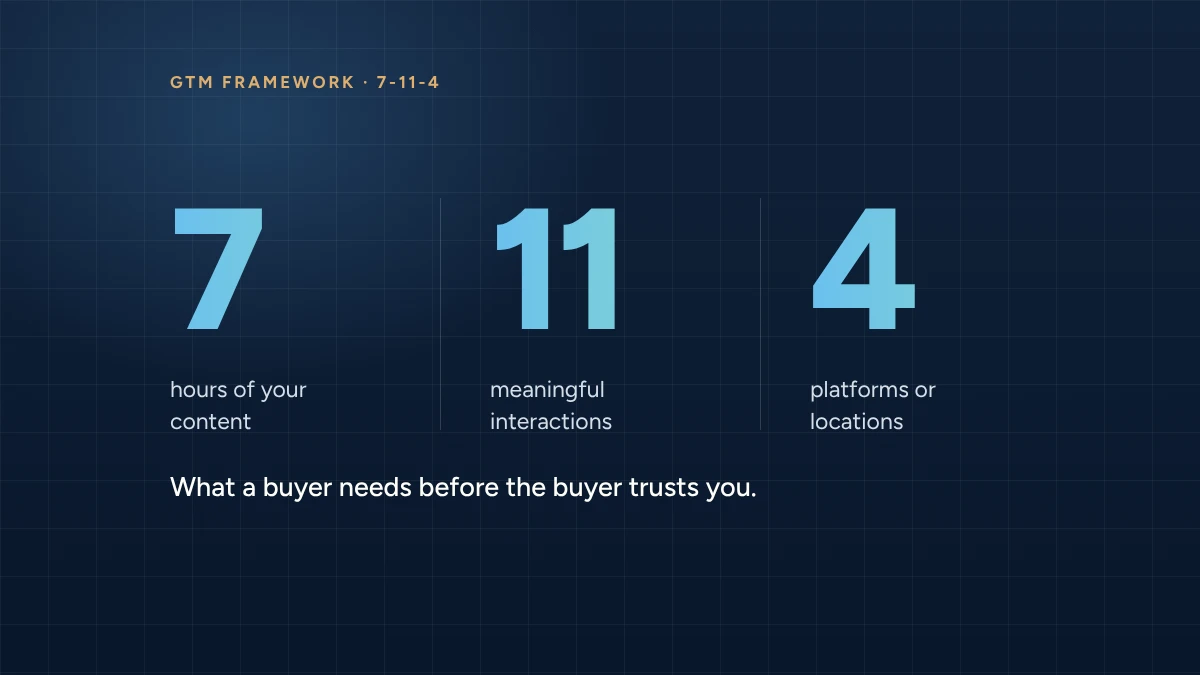
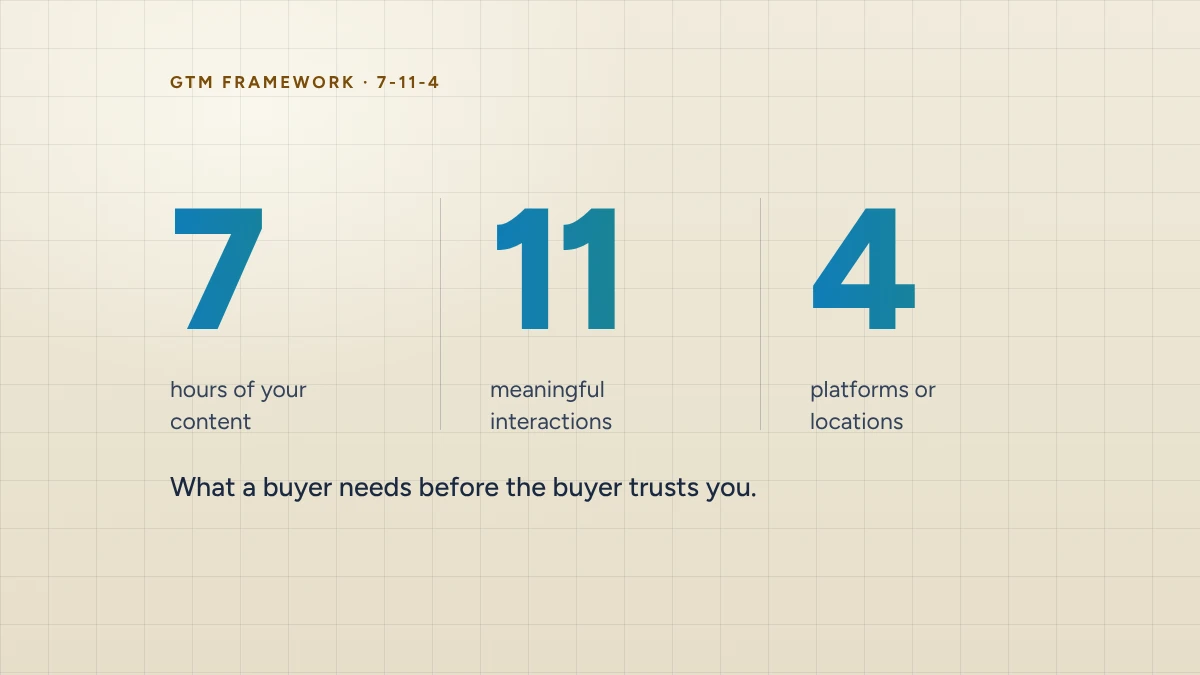
The 7-11-4 framework is a lens for content strategy. It is based on human behavior and digital trust-building. It has three parts:
- 7 hours of content consumed
- 11 meaningful interactions with your brand
- 4 distinct platforms or locations
The roadmap changes the goal from short-term clicks to long-term familiarity. Before someone buys, that person must spend real time with your ideas. That time must cover multiple formats and multiple contexts.
Why does your content need the 7-11-4 framework?
Most prospects need a longer, deeper journey than one blog post, one email or one video. That journey builds trust over time and across channels. The 7-11-4 framework gives you a cohesive content experience. That experience scales trust and drives conversions.
The framework keeps your team focused on relationship-building through multi-platform content experiences. That focus moves someone closer to conversion. A 7-11-4 roadmap helps you:
- Create bingeable and educational content.
- Encourage repeat engagement.
- Distribute content across the platforms your audience already uses.
- Build authority that compounds over time.
How do you build a 7-11-4 content roadmap?
Plan your roadmap across three parts: content length, touchpoints and distribution platforms. Then map each asset to a stage in the buyer journey.
- Stack 7 hours of high-value content. Think in content containers, not one-off posts. Build a library that lets someone go deep with your brand.
- Design for 11 interactions. Plan the touchpoints that make your brand familiar.
- Show up across 4 platforms. Make your content visible in at least four locations your buyers visit regularly.
- Map each asset. Link each asset to a phase in the buyer journey and to a platform distribution plan.
What does a 7-hour content library look like?
A 7-hour content library might contain these assets:
- 2 long-form webinars of 60 minutes each.
- 3 YouTube videos of 20 to 30 minutes each.
- 5 blog posts of 7 to 10 minutes of reading each.
- 1 downloadable guide or toolkit that takes 30 to 45 minutes to go through.
- 1 podcast guest appearance or founder episode of 45 minutes.
Use each asset to support a key stage in the customer journey: awareness, evaluation or decision.
Which 11 interactions build trust?
Trust is cumulative. Every email opened, comment liked, quiz completed or episode played adds to brand memory in your prospect's mind. Suggested interactions:
- Follow on LinkedIn or subscribe to the newsletter.
- Comment on a carousel or social video.
- Attend a live session or webinar.
- Read a blog post or case study.
- Open a lead nurture email.
- Share a resource with a peer.
- Reply to a direct message (DM) or personalized follow-up.
- Download a toolkit or guide.
- Take a quiz or use a calculator.
- Watch a testimonial or customer story.
- Book a demo or reply to outreach.
The interactions do not need a fixed order. They must feel connected and progressive.
Which 4 platforms should you choose?
Modern buyers do not stay in one channel. Choose at least four of these platforms:
| Platform | Job |
|---|---|
| Your website | Blog, landing pages, toolkits |
| Social (LinkedIn, X or Twitter, Instagram) | Discovery, authority, peer validation |
| YouTube or podcast platforms | Long-form trust-building content |
| The home of your nurture engine | |
| Slack, Discord or online communities | Real-time peer engagement |
Use a mix of search, social and direct delivery channels. This mix keeps your presence persistent and accessible.
What does a sample 7-11-4 roadmap look like?
This template maps content, an interaction and a platform to each funnel stage:
| Funnel stage | Content (hours) | Interaction | Platform |
|---|---|---|---|
| Awareness | YouTube series (1 hr) | Social comment | |
| Interest | Blog and newsletter (1 hr) | Email open | Website and email |
| Consideration | Webinar replay (1 hr) | Quiz engagement | Website |
| Trust | Customer story and guide (2 hrs) | Toolkit download | YouTube and email |
| Action | Live question-and-answer session (1 hr) | Demo request | Slack and Zoom |
What mistakes should you avoid?
The main mistake is to optimize content for quantity or novelty instead of depth and distribution. Use this table to find and fix each gap.
| Mistake | Fix |
|---|---|
| You chase viral hits. | Build a cohesive content experience that scales trust. |
| You create disconnected, one-off assets. | Think in content containers that let someone go deep. |
| Your content creation is scattered. | Build a system that compounds visibility and trust. |
| You build a click funnel only. | Earn time and attention across channels to build a trusted brand. |
Common questions
Do the 11 interactions need to happen in order?
The interactions do not need a fixed order. They must feel connected and progressive.
How many platforms does a 7-11-4 roadmap need?
Your content must be visible in at least four locations your buyers visit regularly. Choose from your website, social, YouTube or podcast platforms, email, and online communities.
Which buyer journey stages should the content support?
Each content asset supports a key stage in the customer journey: awareness, evaluation or decision. The sample roadmap uses five funnel stages: awareness, interest, consideration, trust and action.
What makes content count toward the 7 hours?
The content must be bingeable and educational. Examples include long-form webinars, YouTube videos, blog posts, downloadable guides and podcast episodes.
Next step
Copy the sample roadmap table into a spreadsheet. Fill one row per funnel stage with an asset you already have, its length in hours, one interaction and one platform. The empty cells show which assets to create next.

Curated and edited by