The answer
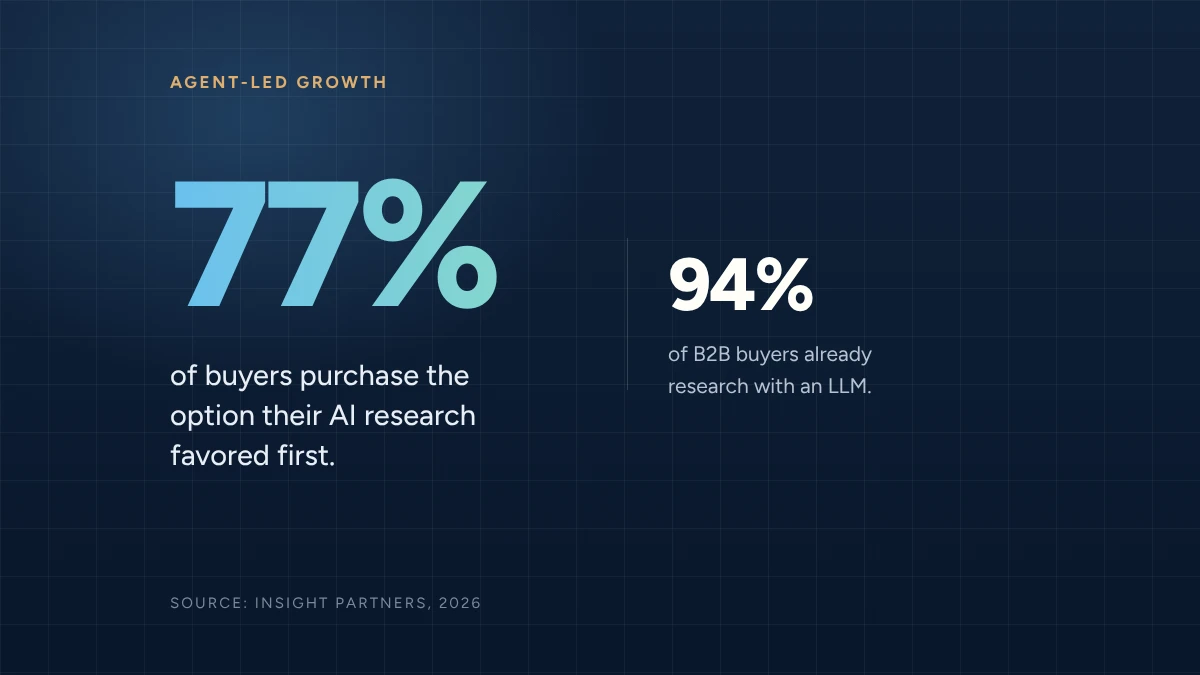
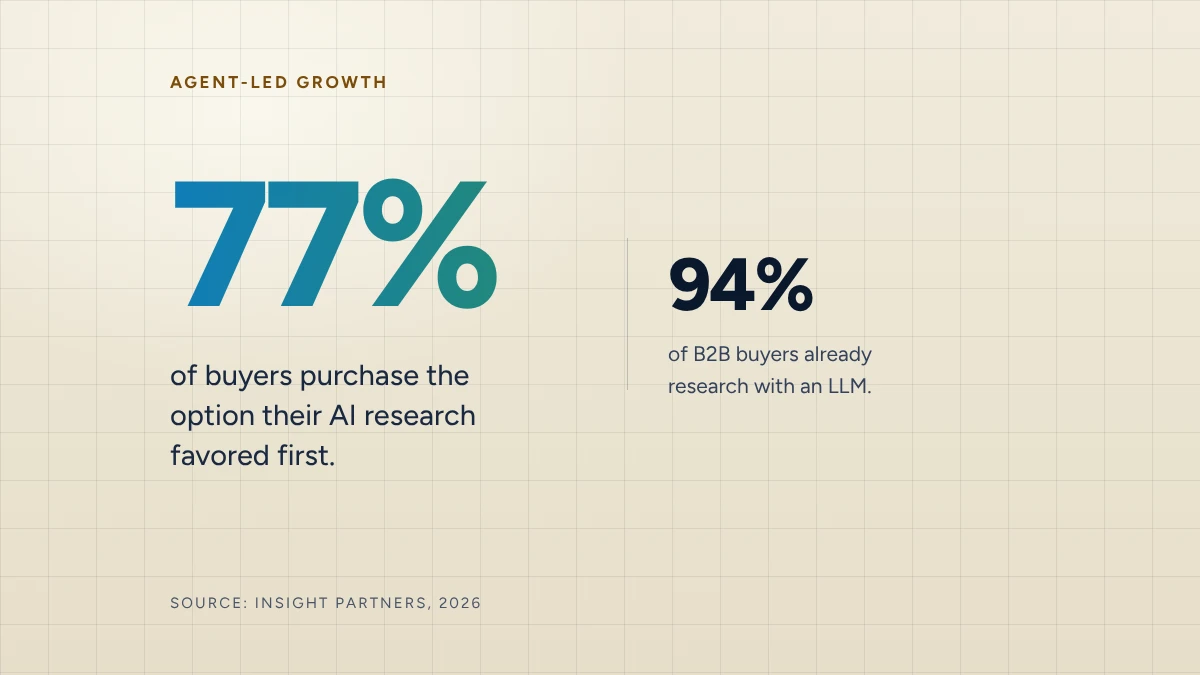
Agent-led growth (ALG) is a new go-to-market (GTM) motion. In ALG, autonomous artificial intelligence (AI) agents take on parts of the customer journey that humans handled before. The agents analyze data, make decisions, take actions and learn. A BCG report found that companies with AI-driven GTM processes cut sales cycle times by 10 to 20%.
What is agent-led growth?
Agent-led growth (ALG) is a new go-to-market (GTM) motion where autonomous artificial intelligence (AI) agents do customer journey tasks. Humans handled these tasks before. The term spread through GTM circles in the last year. Marketers and sales professionals now ask if ALG is hype, a threat to their jobs, or the future of GTM work.
ALG agents are goal-driven. They do three things:
- They analyze data in real time.
- They make decisions and take actions on their own.
- They learn and improve their strategies all the time.
Here are two examples. In marketing, an agent can detect buying signals, write tailored messages and launch campaigns. A person does not have to segment the audience by hand. In sales, an agent can qualify leads, schedule meetings and personalize follow-ups. It does not wait for a sales rep to step in.
McKinsey writes that modern GTM is moving toward "AI-powered orchestration." In this model, agents act like small digital employees. They handle tasks across marketing, sales and customer success.
How is agent-led growth different from traditional automation?
Traditional automation follows fixed rules, and ALG agents chase goals and adapt. Email sequences and chatbots are examples of traditional automation tools. Many teams think, "We already use marketing automation." The table shows why ALG is a different thing.
| Traditional automation | Agent-led growth |
|---|---|
| Predefined workflows | Goal-driven, dynamic decisions |
| Static rules | Learns and adapts all the time |
| Reactive | Looks for growth opportunities on its own |
| Needs a human trigger | Acts without waiting |
ALG moves GTM from static processes to intelligent execution. Think of agents as digital GTM colleagues.
Why should GTM teams care about agent-led growth?
ALG lets GTM teams personalize at scale, close deals faster and cover the full customer journey. Each of these gains changes how a team plans and runs its work.
Scale personalization without extra headcount
Agents can create personalized content for thousands of micro-segments. They can run A/B tests on messages, channels or offers in real time. An A/B test compares two versions to find the better one. Agents can also change the strategy at once when engagement drops.
Teams no longer need to rely on big quarterly campaign cycles. ALG makes optimization continuous. Lifesight.io puts it this way:
"ALG is about shifting from static playbooks to dynamic, responsive GTM execution."
Shorten the sales cycle
Agents can engage prospects right after a website visit. They can qualify leads through intelligent conversations. They can send hot leads directly to sales reps. The result is less lag time and faster deals.
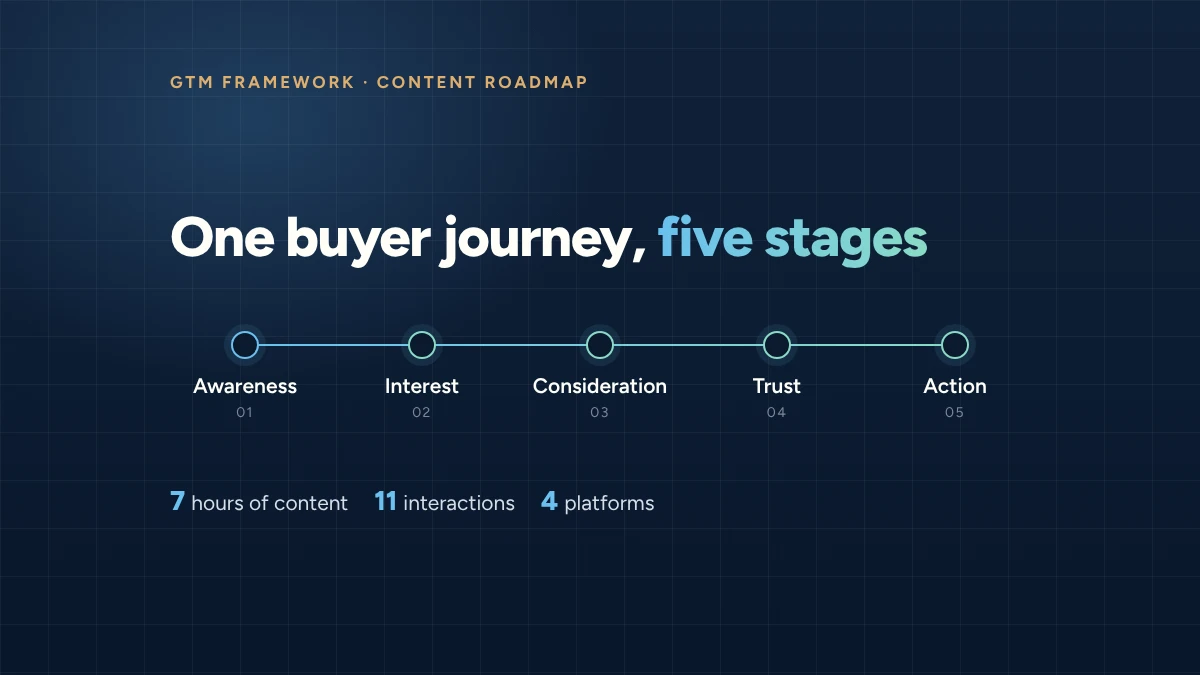
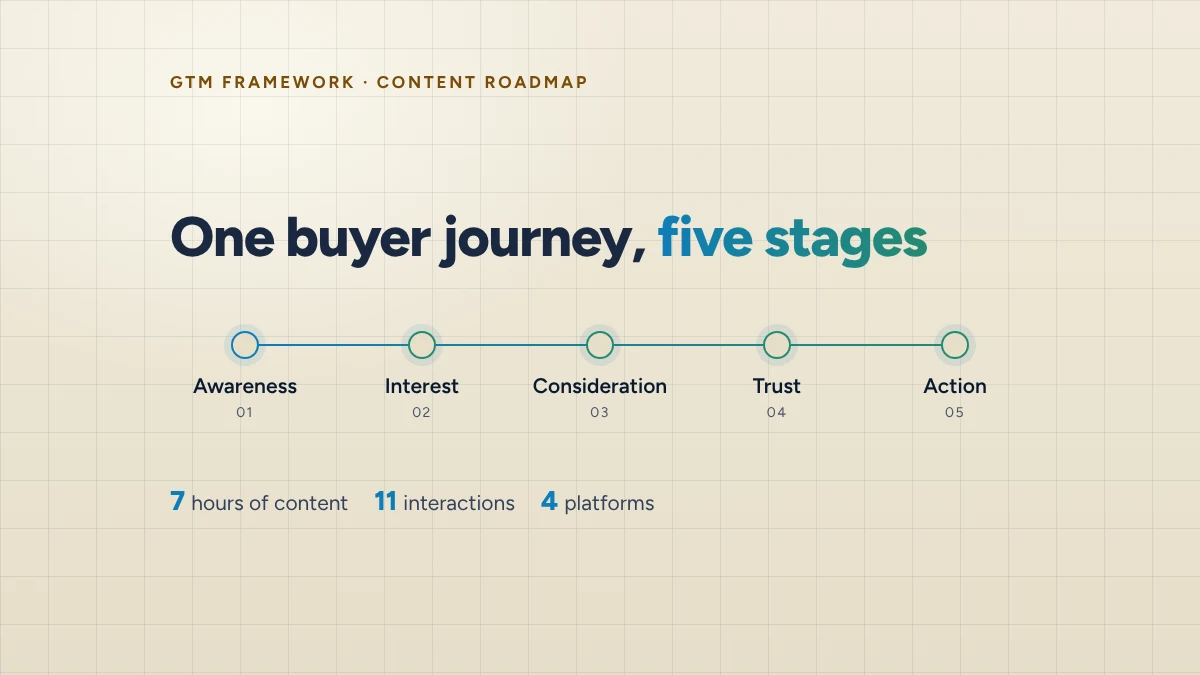
Cover the entire customer journey
ALG is for more than top-of-funnel marketing. Agents can personalize onboarding flows from customer behavior. They can detect churn risks and start proactive outreach. They can also recommend upsell opportunities to current accounts. This connects marketing, sales and customer success under one intelligent framework.
What can agents do in each GTM area?
Agents can handle tasks in five GTM areas, from content to pricing. Use this cheat sheet if you are new to ALG.
| ALG area | What agents can handle |
|---|---|
| Content and campaigns | Generate emails, landing pages, ads and blog posts. Run real-time experiments and adjust creative. |
| Lead generation and qualification | Engage visitors through chat, qualify prospects and book meetings. |
| Sales and onboarding | Build personalized demos, guide product tours and suggest next steps. |
| Customer success | Spot churn signals, recommend solutions and automate check-ins. |
| Pricing and offers | Test discounts and personalize offers from behavior. |
What does the data show?
The data points to faster sales cycles now and more agent-run customer interactions soon. A recent BCG report found that companies with AI-driven GTM processes cut sales cycle times by 10 to 20%.
Gartner also made a projection about AI agents:
"By 2028, AI agents will autonomously manage 40% of digital customer interactions across the buyer journey."
ALG is still early. Vendors such as Lifesight, Salesforce, HubSpot and new AI startups race to build agent-based solutions. These include autonomous microsites that personalize in real time. They also include AI-powered outreach that adapts its messages to the tone of the conversation. Another type is multi-agent orchestration across marketing, sales and customer success.
How do you start with agent-led growth?
Start with one pain point and a small pilot, and do not replace your whole stack. Then measure the impact and scale. Follow these steps:
- Identify a pain point. Look for repetitive campaign tasks, gaps in lead follow-up or long onboarding processes.
- Run a small pilot. Test a single agent on one channel or segment. Track key performance indicators (KPIs) such as engagement lift, conversion speed or cost per lead.
- Make sure your data is good. Agents need good data. Connect your customer relationship management (CRM) system, web analytics and customer behavior signals.
- Set guardrails. Keep your brand voice and stay compliant. Agents must protect your reputation.
- Educate your team. Upskill your people to work with AI agents.
What mistakes should you avoid?
Most ALG mistakes come from moving too fast or treating agents like old tools. Each mistake below has a simple fix.
| Mistake | Fix |
|---|---|
| You rip and replace everything at once. | Pick one pain point and run a small pilot. |
| You treat agents like marketing automation. | Give agents goals, and let them decide and adapt. |
| You feed agents poor data. | Connect your CRM, web analytics and customer behavior signals. |
| You let agents run without guardrails. | Set rules for brand voice and compliance. |
| You see agents as a replacement for people. | Upskill your team to collaborate with AI. |
Common questions
Is agent-led growth just another hype cycle?
No. ALG is real, and it grows fast. Vendors such as Lifesight, Salesforce and HubSpot build agent-based solutions for it. Gartner projects that by 2028, AI agents will autonomously manage 40% of digital customer interactions.
Will agent-led growth replace my job?
No. ALG will not replace marketers or sellers. It is a force multiplier. It frees people to focus on strategy, creativity and complex relationships.
Is agent-led growth only for top-of-funnel marketing?
No. Agents can personalize onboarding, detect churn risks and recommend upsells. ALG connects marketing, sales and customer success under one framework.
How fast can agent-led growth shorten a sales cycle?
A recent BCG report found that companies with AI-driven GTM processes cut sales cycle times by 10 to 20%. Agents engage prospects right after a website visit. They qualify leads and send hot leads directly to sales reps.
Which KPIs should an agent pilot track?
Track engagement lift, conversion speed or cost per lead. Test a single agent on one channel or segment first. Then scale what works.
Next step
Pick one gap in your lead follow-up this week. Test a single agent on that one channel, for example a chat agent that qualifies website visitors and books meetings. Track one KPI, such as conversion speed, and compare it with your current follow-up.
Sources
- McKinsey, on the move of modern GTM toward "AI-powered orchestration"
- Lifesight.io, on the shift from static playbooks to dynamic, responsive GTM execution
- BCG, report on sales cycle times at companies with AI-driven GTM processes
- Gartner, projection that by 2028 AI agents will autonomously manage 40% of digital customer interactions

Curated and edited by